
Beijing, China
天坛 (Tiāntán) [Chinese simplified]
天壇 (Tiāntán) [Chinese traditional]
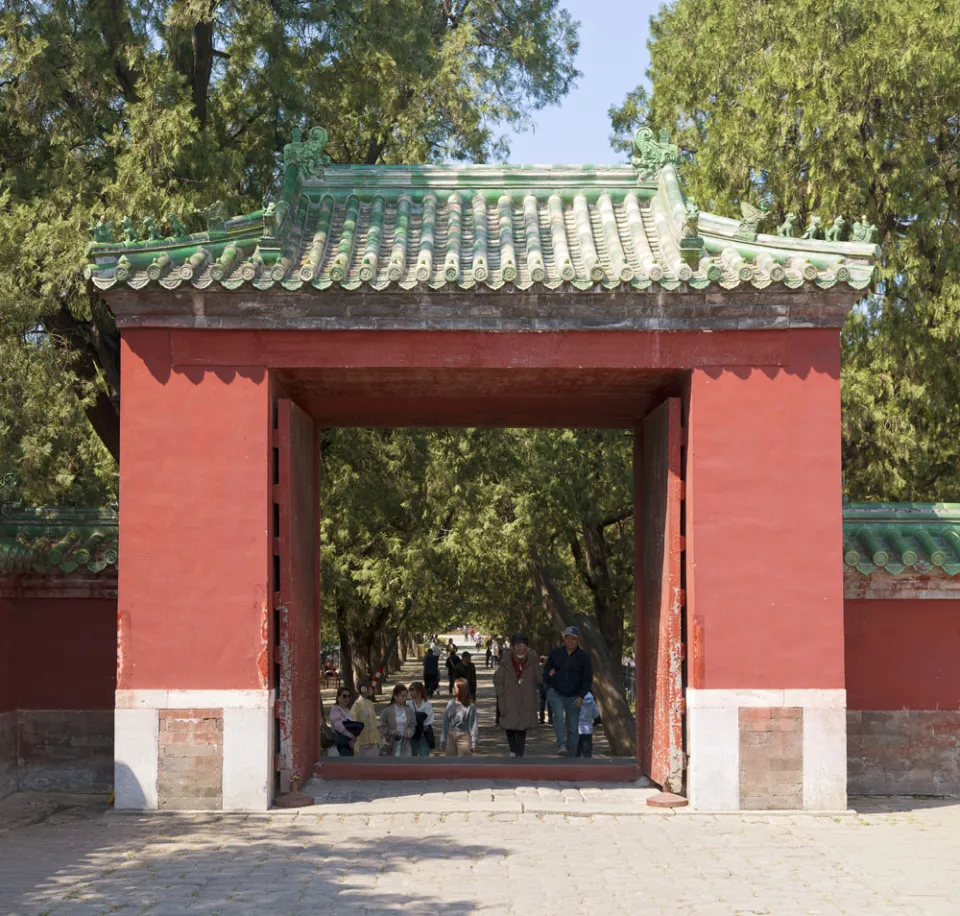
花甲门 (Huājiǎ mén) [Chinese simplified]
Architecture
The Sixty-Year-Gate was specially built by Emperor Qianlong of the Qing Dynasty to reduce the walking distance to the Hall of Prayer for Good Harvests, which became more difficult for him after he turned 60. Its Chinese name “Huajia” derives from the ancient Chinese sexagenary cycle calendar system, where sixty years constitute one full cycle, termed “one Jiazi”. The age of sixty is thus referred to as the ‘Huajia Year’, symbolising longevity and the cyclical nature of life.
structure overview
architectural element(s)
created
1772
material
technique
patronage
Architecture: Temple of Heaven
built
1406-1420
culture
style/period
work type
patronage
Specifications
Specifications: Temple of Heaven
area
2 730 000 m²
Geography
local language location name
北京 (Běijīng), 中国 (Zhōngguó) [Chinese]
historic location names
Beiping
北平
(Běipíng)
historical affiliations
UNESCO World Heritage Site
type
cultural
criteria
I,
II,
III
designation
reference
881
type
cultural
criteria
III,
IV
designation
reference
1714
Image characteristics
maximum image resolution
5,160 × 4,921 pixel
43.7 × 41.7 cm (300 dpi)
capture date
image processing
merged image,
perspective control,
colour corrected
copyrights
Benjamin Hemer
(contact@imaginoso.com (send an e-mail))