
Beijing, China
颐和园 (Yíhéyuán) [Chinese]
頤和園 (Yíhéyuán) [Chinese]
香岩宗印之阁 (Xiāngyán zōngyìn zhīgé) [Chinese]
Architecture
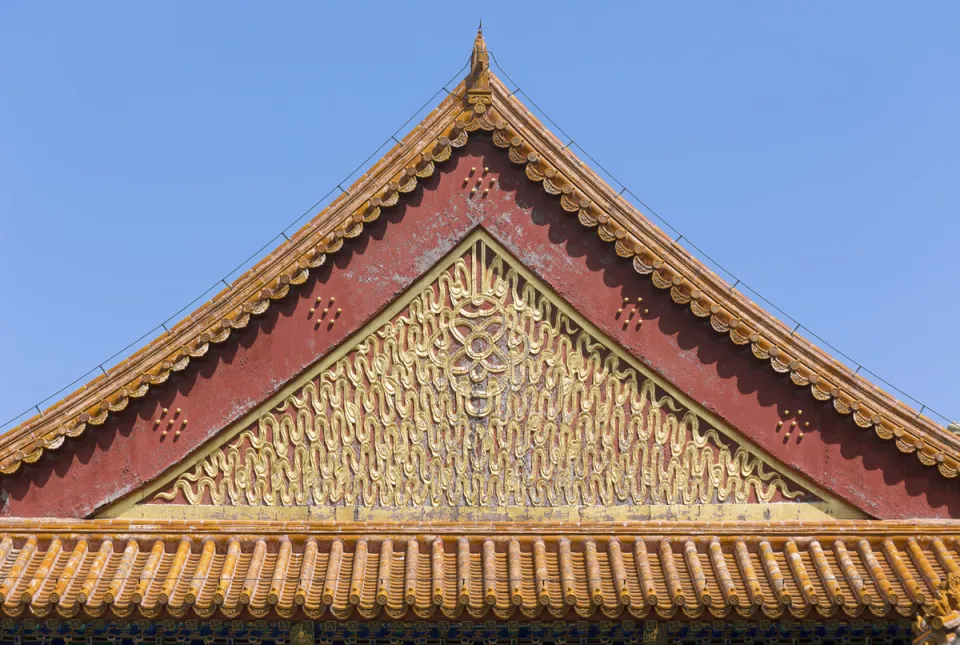
The Pavilion is located along the central axis of Longevity Hill, on its northern slope. It is a core component of the Han-Tibetan architectural complex known as the Four Great Regions Complex. Constructed during the reign of the Qianlong Emperor, the complex was modeled after Tibet's Samye Monastery. Originally a three-story pavilion, it was destroyed by fire during the Anglo-French expedition of 1860 and rebuilt as a single-story Buddhist hall in 1888. The complex centers on Tibetan religious architecture and merges Chinese elements, such as glazed tile roofs, with Tibetan Sumeru pedestal bases and stupas, forming a three-dimensional spatial expression of Buddhist cosmology.
structure overview
Architecture: Pavilion of the Seal of the Fragrant Rock Sect
built
1736-1795
1888
style/period
work type
architect / constr. phase
1888
reconstruction
Architecture: New Summer Palace
built
1751-1764
destroyed/demolished
-
destroyed by British-French troops during the Second Opium War
1900
Destruction again during the Boxer Rebellion
culture
style/period
work type
architect / constr. phase
1751-1764
Built under Emperor Qianlong as a gift for his mother's 60th birthday
1885-1895
Reconstruction under the initiative of Empress Dowager Cixi and the head of the Imperial Navy, Prince Yi Xuan
1902
Reconstruction after destruction during the Boxer Rebellion
patronage
Geography
local language location name
北京 (Běijīng), 中国 (Zhōngguó) [Chinese]
historical affiliations
1764-1912
1912-1949
UNESCO World Heritage Site
type
cultural
criteria
I,
II,
III
designation
reference
880
Image characteristics
maximum image resolution
5,428 × 3,648 pixel
46.0 × 30.9 cm (300 dpi)
capture date
image processing
colour corrected
copyrights
Benjamin Hemer
(contact@imaginoso.com (send an e-mail))