architecture
New Summer Palace, Pavilion of the Seal of the Fragrant Rock Sect
Beijing, China
香岩宗印之阁 (Xiāngyán zōngyìn zhīgé) [Chinese]
Architecture
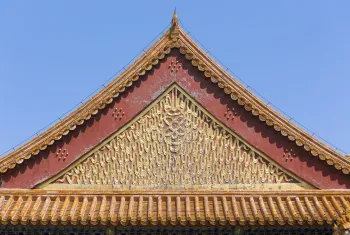
The Pavilion is located along the central axis of Longevity Hill, on its northern slope. It is a core component of the Han-Tibetan architectural complex known as the Four Great Regions Complex. Constructed during the reign of the Qianlong Emperor, the complex was modeled after Tibet's Samye Monastery. Originally a three-story pavilion, it was destroyed by fire during the Anglo-French expedition of 1860 and rebuilt as a single-story Buddhist hall in 1888. The complex centers on Tibetan religious architecture and merges Chinese elements, such as glazed tile roofs, with Tibetan Sumeru pedestal bases and stupas, forming a three-dimensional spatial expression of Buddhist cosmology.
higher-level structure
built
1736-1795
1888
style/period
work type
architect / constr. phase
1888
reconstruction
Architecture: New Summer Palace
built
1751-1764
destroyed/demolished
-
destroyed by British-French troops during the Second Opium War
1900
Destruction again during the Boxer Rebellion
culture
style/period
work type
architect / constr. phase
1751-1764
Built under Emperor Qianlong as a gift for his mother's 60th birthday
1885-1895
Reconstruction under the initiative of Empress Dowager Cixi and the head of the Imperial Navy, Prince Yi Xuan
1902
Reconstruction after destruction during the Boxer Rebellion
patronage
Specifications
Specification: New Summer Palace
area
2 970 000 m²
Geography
local language location name
北京 (Běijīng), 中国 (Zhōngguó) [Chinese]
historical affiliations
1764-1912
1912-1949
UNESCO World Heritage Site
type
cultural
criteria
I,
II,
III
designation
reference
880